ICLR 2026 Workshop on
Representational Alignment
(Re-Align)
April 27th, 2026
ICLR 2026
News
About
The first two editions of the Workshop on Representational Alignment (Re-Align) at ICLR established a community bringing together researchers from machine learning, neuroscience, and cognitive science to tackle a foundational question: How can we meaningfully compare and align the internal representations of intelligent systems?
Building on this foundation, the third edition of the Re-Align Workshop at ICLR pivots from asking how we measure alignment to what we can conclude from observing alignment. In particular, our next edition brings focus on what affordances alignment makes possible. In other words, what can we do with alignment?
The workshop this year has two interdisciplinary focus areas:
1. Neural control. When does representational alignment allow us to meaningfully intervene on a system’s behavior? In AI, this connects to the goals of mechanistic interpretability and the engineering challenge of building safer, steerable models. In neuroscience, it parallels the long-standing goal of understanding how local neural activity gives rise to global function. By exploring how to identify, control, and even compose representations of specific functions or concepts, we create a shared framework for moving from simply mapping circuits to actively understanding their causal role in both artificial and biological systems.
2. Downstream behavior. While much work in representation learning focuses on acquiring useful base representations, representational alignment enables a new capability: targeted control over how those representations are deployed for specific tasks. This moves us beyond asking “does the model know X?” to “can we steer when and how the model applies X?”. We need tasks that assess whether a system’s features can be dynamically reconfigured to meet novel demands in complex domains like collaboration and communication. We invite contributions exploring how alignment transforms static representations into controllable computational primitives.
In addition, this year we introduced a new component, the Re-Align Challenge.
Call for papers
We invite the submission of papers for presentation at the ICLR 2026 Re-Align workshop. We broadly welcome submissions related to representational alignment among artificial and biological information processing systems. Submissions can come from any area of cognitive science, neuroscience, machine learning, or related fields. We welcome short (up to 5 pages + references and appendix) or long (up to 10 pages + references and appendix) technical and position papers.
(For submissions related to the Re-Align Challenge, please see the call for challenge reports.)
Important dates for paper submissions
All deadlines are anywhere on earth (AoE) time.
| Paper submission deadline | Thursday, February 5th, 2026 |
| Reviewing deadline | Thursday, February 26th, 2026 |
| Author notification | Sunday, March 1st, 2026 |
| Camera-ready deadline | Sunday, April 19th, 2026 |
Submission instructions for papers
Submission portal
All paper submissions should be made via OpenReview.
Submission format
Authors must select between the short (up to 5 pages + references and supplement) or long (up to 10 pages + references and supplement) paper submission tracks. The supplement can include an author contributions statement, a disclosure on the use of automated tools (such as generative AI), and/or a technical appendix. Submissions will be evaluated within the track to which they are submitted.
Paper submissions should consist of a single PDF that follows the official ICLR LaTeX template but with an edited header that identifies the submission as to the workshop rather than as to the main conference; for convenience, we have adapted the official ICLR conference template into a Re-Align template .
Anonymization
All paper submissions should be fully anonymized. Please remove any identifying information such as author names, affiliations, personalized GitHub links, etc. Links to anonymized content are acceptable, though we do not require reviewers to examine such content.
Disclosure of the use of artificial intelligence
In accordance with the policies on large language model usage at ICLR 2026, any use of (generative) artificial intelligence to prepare the content of a paper submission must be disclosed. (This disclosure can be placed in the supplement.)
Interdisciplinarity
During submission, authors will be asked to specify if their submission aligns more with cognitive science, neuroscience, or machine learning; we will try to assign reviewers accordingly. Since this workshop is interdisciplinary with the goal to bring together and enable knowledge transfer between researchers from various communities, we suggest (but do not require) submissions to use the terminology and general formalism described in the position paper that the organizers of this workshop co-authored in collaboration with others. (Commentaries and critiques of this framework are also welcome!)
Policies on submission and review of papers
Prohibition on prior publication
We welcome only papers that have not yet been accepted for publication at other venues. Submission of late-breaking results and unpublished or ongoing work and abstracts thereof, including works currently under review but not yet accepted at other venues, are welcome. For example, papers that are concurrently submitted to ICML 2026, CogSci 2026, and CCN 2026 are welcome. We also welcome accepted COSYNE 2026 abstracts, which should be extended to our short or long paper format. Papers that have already appeared at a venue for presentation (including any workshop, conference, or journal) must be significantly updated or extended to be eligible for submission to the workshop.
Policy on the use of artificial intelligence
Because the Re-Align Workshop is a participatory initiative, AI-generated papers are not allowed. AI assistance is permitted, but submissions must be primarily human-authored. Authors must also follow the policies on large language model usage at ICLR 2026, including disclosing the nature of the use of AI and holding responsibility for all content of submitted work.
Reciprocal reviewer policy
At least one author from each submission must volunteer to serve as a reviewer for the Re-Align Workshop between the submission and reviewing deadlines. It is sufficient to identify an author who has already accepted an invitation to be a reviewer for the workshop.
Selection criteria for papers
All paper submissions will be checked for adherence to the workshop submission policies; submissions not meeting formatting, anonymity, and AI disclosure requirements, as well as those deemed off-topic or not meeting minimum academic standards, will be desk-rejected. Valid paper submissions will then undergo double-blind peer review by the workshop's program committee, and editorial decisions will be made by the organizing committee. Accepted papers will be chosen based on theoretical or empirical validation, novelty, and suitability to the workshop's goals.
Non-archival policy for papers
The workshop is non-archival, i.e., we expect that papers appearing at the workshop will be subsequently published at a journal or other venue with archival proceedings.
Presentation format for papers
All accepted papers will be invited for presentation at the ICLR 2026 Re-Align Workshop in the form of a poster. A few select contributions will additionally be invited as contributed talks. Accepted papers will be posted in a non-archival format on the workshop website.
Posters should be in portrait orientation with a maximum height of 91cm (36") and a maximum width of 61cm (24").
Remote presentation for papers
Acceptance decisions on paper submissions will be considered independently from any constraints on the ability of authors to attend ICLR in person. Our goal is to allow every accepted paper to be presented in person. If our assigned space at the conference does not have the capacity for all papers to be presented as posters, we will feature any papers we cannot accommodate via presentation in an asynchronous virtual format to be determined. This option will also be available to presenters who are unable to travel due to visa or funding restrictions.
Call for challenge reports
Research in representational alignment converges on central questions but diverges in its answers. Building on our successful hackathon from last year, we have prepared the Re-Align Challenge to promote transparency, reproducibility, and collaboration in representational alignment research. The challenge provides access to efficient implementations of representational comparison measures and a leaderboard for friendly competition on a representational alignment benchmark.
We invite submissions of challenge reports as companions to leaderboard submissions. For leaderboard submissions to be considered as ICLR 2026 workshop contributions, authors must submit a challenge report through OpenReview that will undergo review by the organizing committee.
(Position papers and other contributions not directly tied to leaderboard submissions should be submitted to the call for papers.)
Important dates
All deadlines are anywhere on earth (AoE) time.
| Challenge report submission deadline | Thursday, February 26th, 2026 |
| Author notification | Sunday, March 1st, 2026 |
| Camera-ready deadline | Sunday, April 19th, 2026 |
Submission instructions for challenge reports
Leaderboard submission
The Hugging Face leaderboard is live. The starter code is available via the Re-Align Hackathon.
Challenge report submission
All challenge report submissions should be made via OpenReview. Challenge reports should be anonymized and format content in Markdown, with additional metadata as specified by our submission form on OpenReview. Challenge reports should be associated with a submission to the Re-Align Challenge leaderboard.
Review policy
Challenge reports submitted on OpenReview should be fully anonymized. These submissions will go through double-blind peer review for quality. The organizers will separately review leaderboard submissions to ensure they are valid and consistent with the corresponding challenge report.
Presentation format
Accepted challenge reports will be invited for presentation at the ICLR 2026 Re-Align Workshop in the form of a poster. Select contributions may additionally be invited as contributed talks.
Posters should be in portrait orientation with a maximum height of 91cm (36") and a maximum width of 61cm (24").
Outstanding challenge report awards
In addition to leaderboard winners, we will also award several awards for outstanding challenge report. We intend to give these awards to submissions that are innovative, unusual, or make novel and significant contributions to representational alignment research.
Invited speakers

David Bau
Northeastern University

Arturo Deza
Artificio

Alona Fyshe
University of Alberta

Danielle Perszyk
Amazon AGI SF Lab
Organizers

Badr AlKhamissi
EPFL

Brian Cheung
MIT / UCSF

Dota Dong
MPI for Psycholinguistics

Erin Grant
NYU / UAlberta

Stephanie Fu
UC Berkeley

Kushin Mukherjee
Stanford

Ilia Sucholutsky
NYU / Purdue
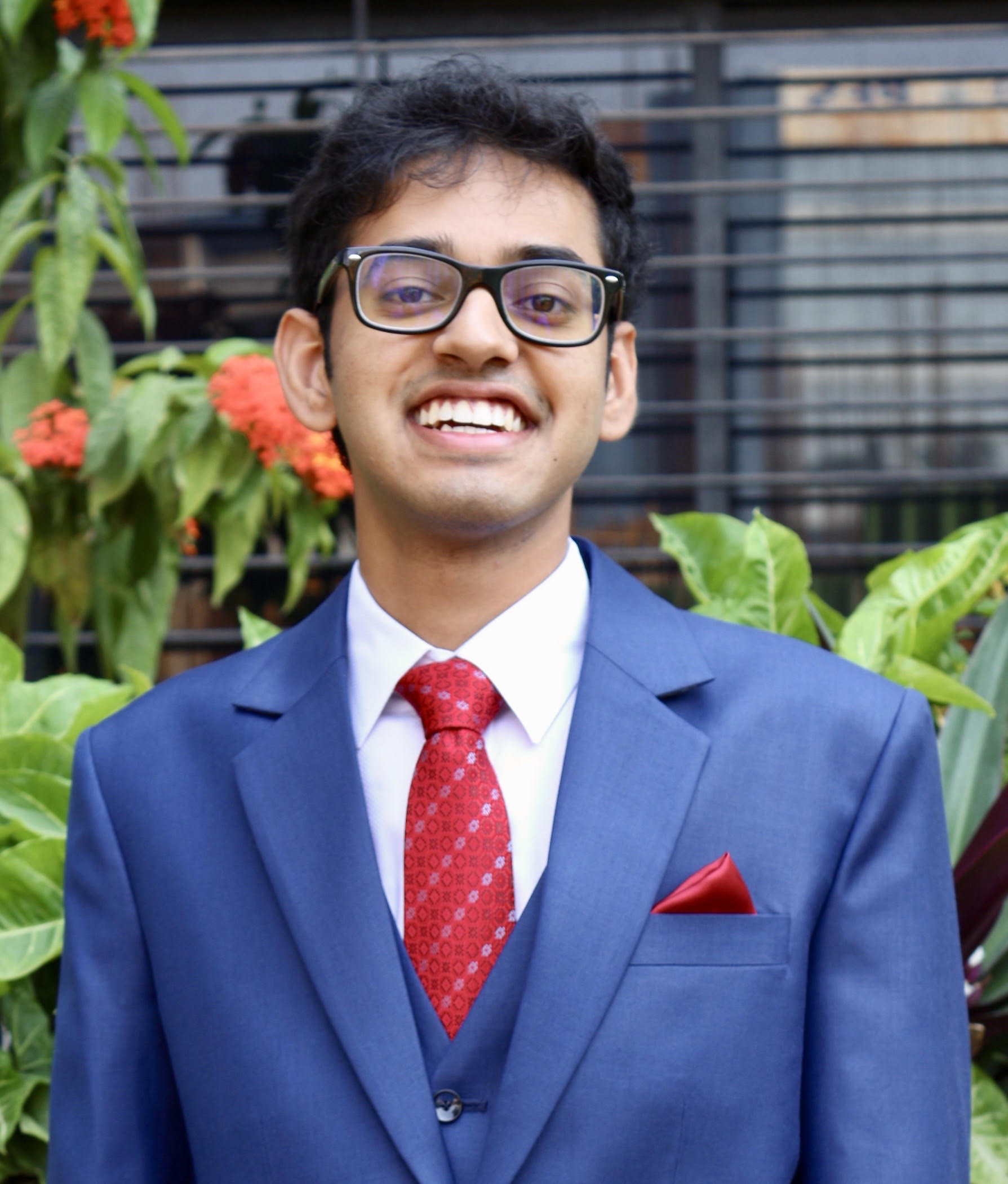
Siddharth Suresh
UW-Madison / Amazon AGI SF Lab
Program committee
We thank the following reviewers for providing thorough and constructive feedback on submissions to the workshop: